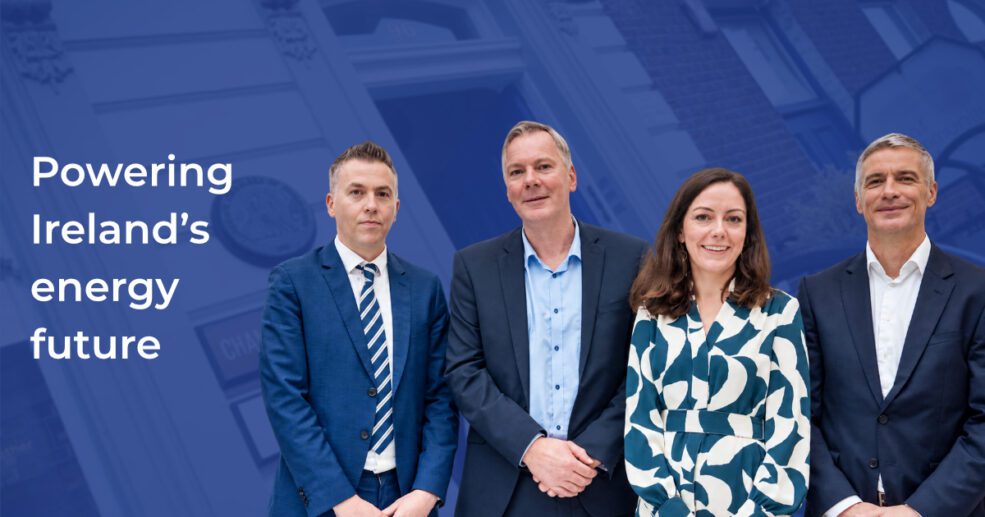
Limerick Chamber event brings together leaders in energy, infrastructure, connectivity and industry to highlight regional role for national delivery.
08 October 2026, Limerick City
The Mid-West’s energy, industrial, digital and infrastructure assets must be developed as part of a coordinated regional system if Ireland is to strengthen energy security, accelerate decarbonisation and remain competitive for future investment.
That was the central message emerging from Energy on the Estuary 2026, hosted by Limerick Chamber at Gardens International, Henry Street, Limerick, on Monday, 5 October.
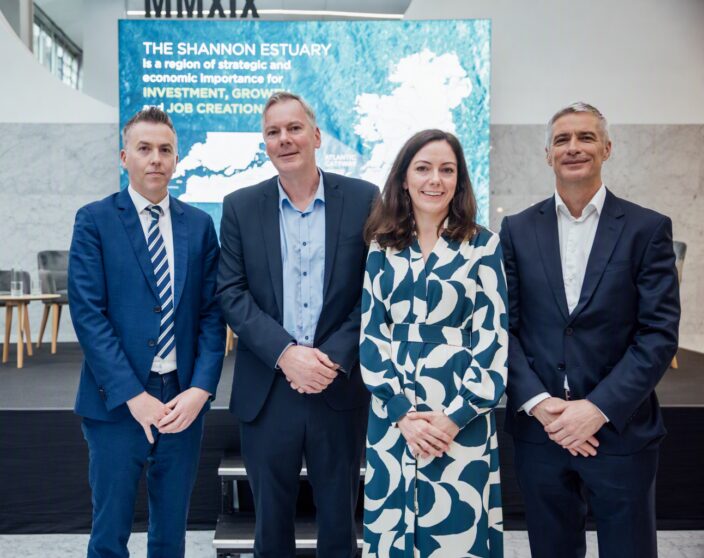
The event brought together representatives from government, energy, infrastructure, advanced manufacturing, digital connectivity and regional development to examine how the Mid-West can make a greater contribution to Ireland’s national energy, digital infrastructure and economic ambitions.
The event was supported by ESB as Principal Event Partner, Enet as Programme Partner, Shannon Foynes Port Company as Series Partner, and Limerick Twenty Thirty as Hosting Partner.
Opening the programme, Minister Timmy Dooley addressed participants before two expert panels considered the region’s energy and enterprise opportunities.
The discussions focused on the combination of assets already present across the Mid-West, including established electricity generation and grid infrastructure, gas networks, deep-water port capacity, renewable-energy potential, internationally traded industry, advanced manufacturing, strategic development sites, digital connectivity and a skilled workforce.
Participants also examined the further investment required to enable those assets to operate as an integrated regional proposition capable of supporting national energy security, industrial decarbonisation and future enterprise growth.
Regional opportunity within the national challenge
The first panel, Regional Opportunity within the National Challenge, examined how the Mid-West’s existing and planned energy, grid, gas, industrial and infrastructure assets can contribute to addressing Ireland’s wider challenges around security of supply, sustainability, resilience and economic competitiveness.
The conversation considered the future role of the region’s electricity and gas networks, the transition of established energy assets, the requirements of major industrial energy users, the development of renewable energy, and the importance of infrastructure being delivered ahead of emerging demand.
The panel also explored how large industrial users can support the wider energy transition through investment in efficiency, electrification, on-site generation, storage, demand management and long-term renewable-energy purchasing.
A recurring theme was that the Mid-West’s strength does not rest on one project or technology. Its opportunity arises from the concentration of complementary assets across energy, industry, ports, logistics, connectivity and skills, and from the potential to coordinate those assets around a clear delivery plan.
ESB’s contribution to the discussion centred on the continuing evolution of Moneypoint and the role that established energy sites can play in Ireland’s transition. The site brings together strategic land, deep-water access, grid connectivity and energy-sector expertise. ESB’s updated regional proposition envisages lower-carbon generation, storage and the development of a renewable-energy hub, while the company’s wider strategy prioritises decarbonised electricity generation, resilient infrastructure and support for customers on their journey towards net zero.
Paul Lennon, Head of UK Renewables and Offshore Wind with ESB, said:
The Shannon Estuary and wider Mid-West have long played an important role in Ireland’s electricity system and will remain central as that system evolves. At Moneypoint, ESB has an established strategic energy site with significant land, deep-water access, grid infrastructure and generations of energy expertise. Our updated vision is focused on lower-carbon generation, energy storage and the site’s development as a renewable-energy hub.
This supports ESB’s wider strategy to achieve net zero by 2040 by decarbonising electricity generation, building resilient infrastructure and helping customers and communities move towards a clean and affordable energy future. Energy on the Estuary demonstrated the opportunity to connect the Mid-West’s energy, industrial and infrastructure assets in a way that strengthens national energy security, supports decarbonisation and enables sustainable economic growth.
Preparing the region for the future of enterprise
The second panel examined how Ireland can align investment in energy, grid, fibre, data centres and other critical infrastructure to support the next generation of advanced manufacturing, AI, cloud services and internationally connected businesses.
The discussion highlighted the increasingly close relationship between energy and digital infrastructure. Future investment decisions will depend not only on the availability of secure and competitively priced power, but also on high-capacity fibre, resilient national and international connectivity, network diversity, enterprise-ready sites, planning certainty and skills.
Participants also considered the importance of continuing to invest in digital infrastructure ahead of demand, ensuring that connectivity and capacity do not become future constraints as Ireland competes for the next generation of international investment.
The discussion also considered the role of regional data centre and digital infrastructure development, including how locations such as the Mid-West can support national resilience, international workloads and wider economic development, rather than relying solely on locally generated demand.
John Gilvarry, CTO with Enet, said:
The infrastructure decisions Ireland makes today will determine our ability to compete for the next generation of digital and international investment. We have seen the challenges that emerge when critical infrastructure does not keep pace with demand, and we need to ensure that digital capacity does not become the next constraint.
That means continuing to invest in high-capacity fibre, resilient national networks and regional digital infrastructure alongside energy and grid development. The Mid-West has an opportunity to play a greater role in Ireland’s future infrastructure ecosystem, supporting regional development while also strengthening national resilience and our ability to compete for international investment.
The panel also addressed the importance of resilient national and international connections, including the need for network diversity and infrastructure capable of supporting businesses in an increasingly complex geopolitical and economic environment.
From regional potential to coordinated delivery
The discussion highlighted the role of Shannon Foynes Port Company in developing the Shannon Estuary as an international energy, logistics and industrial hub. Its Vision 2041 strategy identifies floating offshore wind, green industrial development and sustainable logistics as key opportunities, supported by the planned Foynes Island Deepwater Development
Pat Keating, Chief Executive of Shannon Foynes Port Company, said:
The Shannon Estuary combines deep and sheltered waters, unparalleled wet storage areas, available development land, access to only 400kv grid in the country together with existing energy infrastructure and proximity to Atlantic wind resources. These assets give the region a strong platform from which to support Ireland’s future offshore wind industry.
Realising that opportunity will require coordinated delivery of deep-water port capacity, grid, road and rail infrastructure, alongside a clear offshore project pipeline. With the right investment and policy certainty such as the National DMAP, offshore wind can support new manufacturing, supply-chain activity, skills and long-term employment across the Mid-West. The Shannon Estuary is the perfect location to fully integrate renewable energy supply with future large energy users. Accordingly, there is real potential to develop the region as a green digital corridor creating tens of thousands of quality jobs in a net zero environment.
Chamber priorities for energy and the future of business
The event concluded with a call from Limerick Chamber for energy, digital and enterprise infrastructure to be planned as part of a coordinated regional system.
The Chamber’s priorities include strengthening energy security, accelerating investment in electricity-grid capacity, providing a clear development pathway for West Coast offshore renewable energy, supporting the decarbonisation of existing industry, and ensuring that infrastructure is delivered ahead of future business demand.
The Chamber also emphasised that the Mid-West’s future competitiveness will depend on the combined availability of secure and affordable energy, high-capacity digital connectivity, development-ready sites, transport infrastructure, skills and greater certainty around planning and project delivery. These elements will be essential both to retain existing employers and to compete for future investment in advanced manufacturing, life sciences, renewable energy and data-intensive enterprise.
Maria Gleeson, President of Limerick Chamber, said:
The Mid-West has the energy, industrial, digital and skills assets required to make a much greater contribution to Ireland’s future growth. The priority now is to connect those strengths through coordinated investment in energy networks, renewable generation, digital connectivity, transport, enterprise sites and skills.
Our energy transition must strengthen security and support decarbonisation, while protecting the competitiveness of existing employers and enabling the businesses of the future.
I want to thank our speakers, moderators, panellists and attendees for their contribution, and ESB, Enet, Shannon Foynes Port Company and Limerick Twenty Thirty for their support. Their sponsorship allows Limerick Chamber to bring national and regional stakeholders together for important discussions like this in the Mid-West.